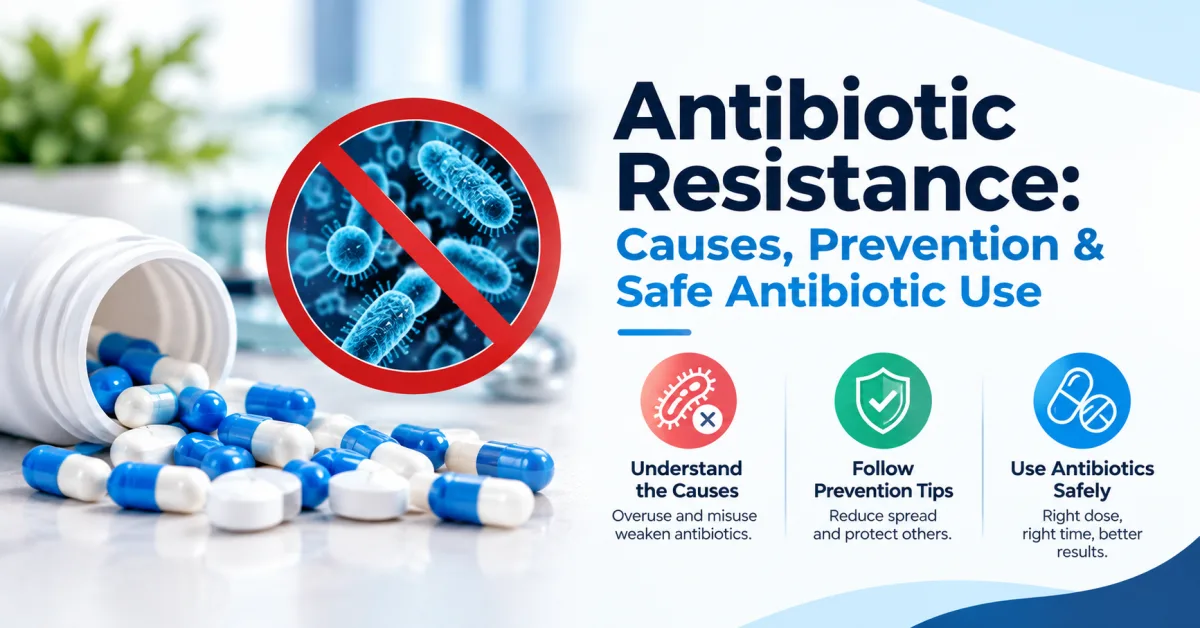
Antibiotic resistance occurs when bacteria develop the ability to survive medicines that are designed to kill them or stop their growth. When bacteria become resistant, some bacterial infections can become more difficult to treat and healthcare professionals may have fewer effective treatment options. Antibiotic resistance is an important global health concern, making responsible antibiotic use and infection prevention increasingly important.
Antibiotics are medicines used to treat certain bacterial infections. They do not work against viral infections such as most common colds and influenza. Understanding when antibiotics are appropriate, how resistance develops, and how it can be prevented can help people make safer and more informed healthcare decisions.
What Causes Antibiotic Resistance?
Antibiotic resistance can develop naturally as bacteria change over time. However, inappropriate and unnecessary use of antibiotics can accelerate the development and spread of resistant bacteria. Using antibiotics when they are not needed, using the wrong antibiotic, or using antibiotics without appropriate medical guidance can contribute to the problem.
Unnecessary Use of Antibiotics
Antibiotics do not treat viral infections. Taking antibiotics for illnesses that do not require them exposes bacteria to the medicine without providing the intended benefit. Unnecessary antibiotic use can also expose patients to avoidable side effects.
Incorrect Use of Antibiotics
Different bacterial infections may require different treatments. Using an antibiotic that is not appropriate for a particular infection may result in ineffective treatment. A qualified healthcare professional can determine whether an antibiotic is suitable based on the infection, symptoms, medical history, and other relevant factors.
Why Is Antibiotic Resistance a Serious Health Concern?
When bacteria become resistant to antibiotics, infections can become harder to treat. Some patients may require alternative medicines, additional diagnostic testing, or closer medical monitoring. Resistant infections can also contribute to longer illness and increased healthcare costs.
According to the World Health Organization, approximately one in six laboratory-confirmed bacterial infections worldwide was resistant to antibiotic treatment in 2023. WHO identifies misuse and overuse of antimicrobials as major drivers of antimicrobial resistance.
How Does Antibiotic Resistance Spread?
Resistant bacteria can spread between people and through healthcare facilities, communities, animals, food, and the environment. Resistant microorganisms can also spread when appropriate infection-prevention practices are not followed.
Good hygiene, vaccination, safe food practices, infection prevention, and responsible antibiotic use can help reduce the development and spread of resistant bacteria.
For more information, visit the World Health Organization information on antimicrobial resistance.
How Can Antibiotic Resistance Be Prevented?
Use Antibiotics Only When Appropriate
Antibiotics should be used when a qualified healthcare professional determines that they are appropriate. Do not use antibiotics prescribed for another person and do not use leftover antibiotics to treat a new illness without professional advice.
Follow Professional Instructions
If an antibiotic is prescribed, follow the instructions provided by your doctor or pharmacist. Do not independently change the dose or treatment schedule. If you experience side effects or are unsure how to use your medicine, contact a healthcare professional.
Practise Good Hygiene
Regular handwashing, covering coughs and sneezes, keeping wounds clean and covered, and following appropriate infection-control practices can help reduce the spread of infections and resistant bacteria.
Follow Recommended Vaccinations
Vaccination can help prevent certain infections and may reduce the need for antibiotic treatment. Follow vaccination recommendations appropriate for your age and individual circumstances.
Antibiotics and Viral Infections
One common misunderstanding is that antibiotics can treat every type of infection. Antibiotics are designed to treat bacterial infections and do not treat viruses.
Many common colds and cases of influenza are caused by viruses. Taking antibiotics for these conditions will not make the viral infection go away. If symptoms become severe, persist longer than expected, or get worse, speak with a qualified healthcare professional.
The NHS guide to antibiotics provides additional information about antibiotic use and why antibiotics are not effective against viral infections.
What Is Antibiotic Stewardship?
Antibiotic stewardship means using antibiotics responsibly so that patients receive appropriate treatment while unnecessary antibiotic exposure is reduced. Healthcare professionals support antibiotic stewardship by selecting suitable treatments, considering diagnostic information when appropriate, and reviewing treatment when new information becomes available.
Patients can also support responsible antibiotic use by avoiding self-medication, following professional instructions, and asking healthcare professionals whether antibiotics are appropriate for their illness.
Common Mistakes to Avoid With Antibiotics
Do Not Share Antibiotics
An antibiotic prescribed for one person may not be appropriate for another person. Never share prescription antibiotics with family members, friends, or other people.
Do Not Save Leftover Antibiotics
Leftover antibiotics should not be saved for self-treatment of a future illness. A future infection may have a different cause and may require a different approach to treatment.
Do Not Self-Medicate
Taking antibiotics without appropriate medical guidance can result in unnecessary treatment, unwanted side effects, and increased pressure that contributes to antibiotic resistance.
Antibiotic Resistance and Responsible Healthcare
Responsible use of medicines is an important part of protecting antibiotic effectiveness. Patients should understand that antibiotics are not appropriate for every infection and that the correct treatment depends on the cause of the illness.
For additional information about antibiotics, visit the BuyCenforce Antibiotics Category. You can also explore the BuyCenforce Health Blog for additional health education.
Frequently Asked Questions
What is antibiotic resistance?
Antibiotic resistance occurs when bacteria develop the ability to survive antibiotics that previously affected them. This can make some bacterial infections more difficult to treat.
What are the main causes of antibiotic resistance?
Major contributing factors include unnecessary and inappropriate antibiotic use and the spread of resistant bacteria. Infection prevention and responsible antibiotic use can help reduce the problem.
Do antibiotics work for colds and flu?
No. Colds and influenza are caused by viruses, and antibiotics are designed to treat bacterial infections rather than viral infections.
How can I help prevent antibiotic resistance?
Use antibiotics only when appropriate, follow professional medical instructions, avoid sharing or saving leftover antibiotics, practise good hygiene, and follow recommended infection-prevention measures.
Can antibiotic resistance affect anyone?
Yes. Resistant bacteria can spread through communities and healthcare settings and can affect people of different ages.
Conclusion
Antibiotic resistance is an important health issue that can make bacterial infections more difficult to treat. Responsible antibiotic use, infection prevention, good hygiene, vaccination, and appropriate medical guidance can help reduce the development and spread of resistant bacteria.
For more health information, visit the BuyCenforce Respiratory Care Category and explore the BuyCenforce Health Blog for additional educational resources.
For authoritative medical information, readers can also visit the CDC information on antimicrobial resistance.
Medical Disclaimer: This article is for general educational purposes only and does not replace professional medical advice, diagnosis, or treatment. Antibiotics should be used according to appropriate medical guidance.