
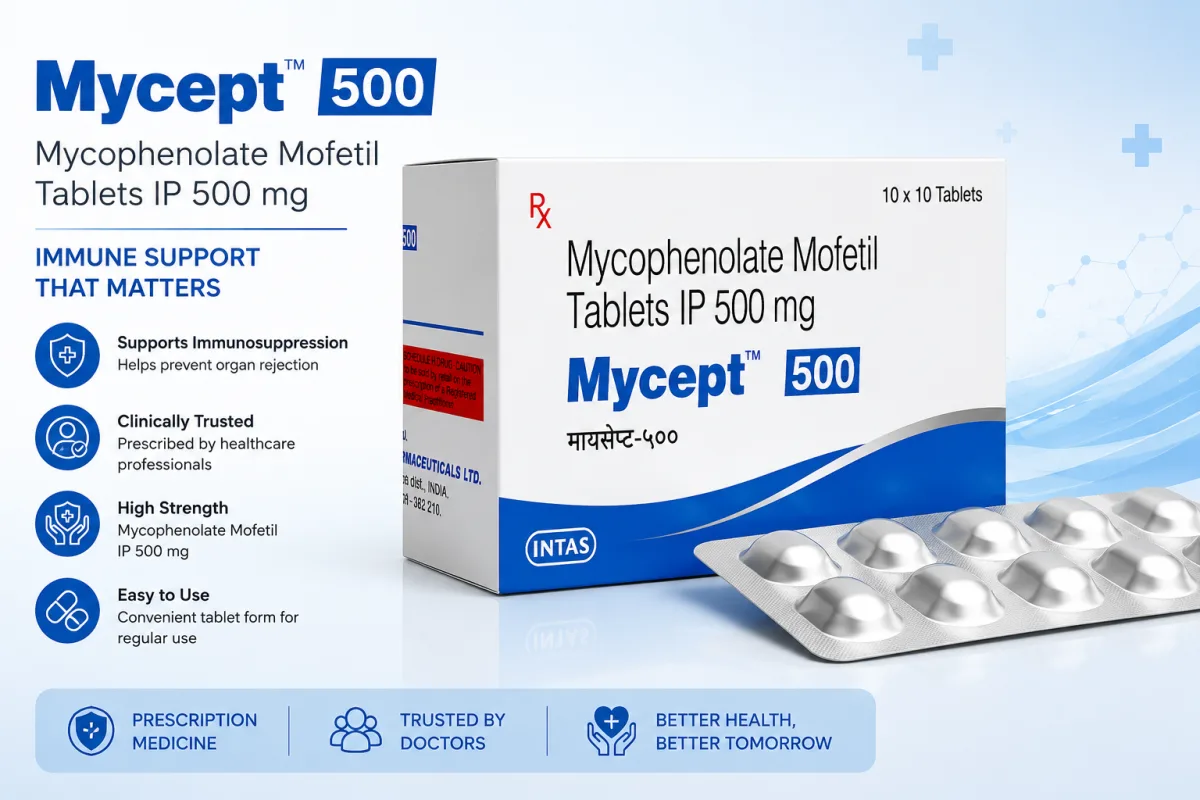
Mycept 500 Tablet contains Mycophenolate Mofetil 500 mg, an immunosuppressant medicine used as part of prescribed treatment regimens to help prevent organ rejection following transplantation. Because it affects the immune system, Mycept 500 should be used only under the supervision of a qualified healthcare professional and according to the treatment plan provided by the transplant specialist.
Understanding how Mycept 500 works, why it is prescribed, and what precautions are important can help patients follow their treatment more safely. This guide covers the common uses of Mycept 500, dosage considerations, how to take it, possible side effects, pregnancy-related precautions, infection risks, drug interactions and the importance of regular medical monitoring.
What Is Mycept 500 Tablet?
Mycept 500 Tablet is an oral prescription medicine containing Mycophenolate Mofetil 500 mg. It belongs to the immunosuppressant group of medicines. Mycophenolate mofetil reduces certain immune-system activity that may otherwise contribute to rejection of a transplanted organ.
Mycept 500 may be included in a broader transplant-care regimen along with other medicines. The exact treatment plan depends on factors such as the type of organ transplant, the patient's medical condition, other medicines being used and the monitoring requirements determined by the treating healthcare professional.
What Is Mycept 500 Used For?
Mycept 500 is used as part of treatment to help prevent organ rejection following transplantation. It may be prescribed in transplant-care regimens involving organs such as the kidney, heart or liver, according to the treating specialist's assessment and the approved use of the medicine.
The medicine is not intended to treat ordinary infections or common illnesses. Its use requires careful medical supervision because suppressing immune-system activity can affect the body's ability to respond to infections and other health conditions.
How Does Mycept 500 Work?
Mycophenolate mofetil is converted in the body to mycophenolic acid, which interferes with an enzyme involved in the production of certain nucleotides required by immune cells. This reduces the proliferation of activated T and B lymphocytes and helps suppress immune responses that may contribute to transplant rejection.
Because Mycept 500 changes immune-system activity, patients taking it may require regular clinical follow-up and laboratory monitoring. The treatment should be continued or adjusted only according to the instructions of the treating healthcare professional.
How to Take Mycept 500 Tablet
Take Mycept 500 Tablet exactly as prescribed by your doctor or transplant specialist. Swallow the tablet with water and follow the prescribed schedule consistently. Do not change the dose, frequency or duration of treatment on your own.
Taking immunosuppressive medicines consistently is particularly important in transplant care. If you have difficulty following the prescribed schedule or experience problems with your medicine, contact your doctor or pharmacist rather than changing the treatment yourself.
Mycept 500 Dosage
The appropriate dosage of Mycept 500 is individualized by the treating healthcare professional. The prescribed regimen can depend on the type of transplant, other immunosuppressive medicines, the patient's response to treatment, laboratory results and overall clinical condition.
Do not copy the dosage prescribed for another transplant patient. A dose that is appropriate for one person may not be appropriate for another. Always follow the exact instructions provided by your transplant specialist.
Possible Side Effects and Safety Considerations
Mycept 500 can affect the immune system and may increase susceptibility to infections. Patients may also experience gastrointestinal symptoms or changes in blood-cell counts during treatment. The severity and likelihood of adverse effects can vary between individuals.
Seek medical advice if you develop symptoms that may indicate an infection or experience unusual or persistent symptoms during treatment. Your healthcare professional can determine whether evaluation, monitoring or treatment changes are necessary.
Mycept 500 and Pregnancy
Mycophenolate mofetil has important pregnancy-related safety warnings. It may increase the risk of pregnancy loss and congenital abnormalities. Anyone who is pregnant, planning pregnancy or may become pregnant should discuss the medicine with their healthcare professional before treatment and during therapy.
Patients should not stop or change transplant medicines on their own because doing so may affect transplant care. Any change in immunosuppressive treatment should be discussed with the treating specialist.
Mycept 500 and Infections
Since Mycept 500 suppresses certain immune responses, patients receiving treatment may be more susceptible to infections. Follow your healthcare professional's recommendations regarding monitoring and report concerning symptoms promptly.
Tell your doctor if you develop symptoms of infection or have been exposed to an infectious illness. Your healthcare professional can determine whether additional evaluation or treatment is required.
Drug Interactions
Mycept 500 may interact with other medicines and healthcare products. Before starting treatment, tell your doctor about all prescription medicines, over-the-counter medicines, vitamins and supplements you use.
Certain medicines and products may affect mycophenolate exposure or treatment effectiveness. A healthcare professional should review your complete medication list before making changes to your treatment.
Important Precautions
- Use Mycept 500 only when prescribed by a qualified healthcare professional.
- Follow the prescribed dose and schedule carefully.
- Do not stop or change the medicine without medical advice.
- Tell your doctor about all medicines, vitamins and supplements you use.
- Report signs or symptoms of infection promptly.
- Discuss pregnancy planning and contraception with your healthcare professional.
- Attend recommended laboratory tests and follow-up appointments.
- Do not share prescription medicines with other people.
- Keep the medicine away from children.
Why Regular Medical Monitoring Is Important
Mycept 500 affects immune-system activity and therefore requires appropriate medical supervision. Your healthcare professional may recommend regular blood tests and clinical reviews to monitor treatment response and identify potential complications.
Do not make treatment decisions based only on information found online. If you have questions about your dosage, side effects, interactions, pregnancy concerns or treatment duration, speak directly with your doctor or pharmacist.
Related Healthcare Products
If you are looking for related immunosuppressive medicines, you can also explore our Mycept-S 360 Tablet and Panimun Bioral 50mg Capsule product listings. These medicines have different active ingredients and treatment considerations, so they should not be substituted for Mycept 500 without professional medical advice.
For additional information about Mycept 500 Tablet and its product details, you can also visit the BuyCenforce healthcare products collection.
Frequently Asked Questions
What is Mycept 500 Tablet?
Mycept 500 Tablet is a prescription immunosuppressant containing Mycophenolate Mofetil 500 mg. It is used as part of treatment regimens designed to help prevent organ rejection following transplantation.
What is Mycept 500 used for?
Mycept 500 is used with other prescribed medicines to help prevent rejection of a transplanted organ under the supervision of a transplant specialist.
What is the active ingredient in Mycept 500?
The active ingredient is Mycophenolate Mofetil 500 mg.
Can Mycept 500 be taken during pregnancy?
Mycophenolate mofetil has important pregnancy-related risks. Anyone who is pregnant or may become pregnant should discuss the medicine with a healthcare professional before use.
Can I stop Mycept 500 if I feel well?
No. Do not stop or change your prescribed immunosuppressive treatment without consulting your transplant specialist. Consistent treatment is an important part of transplant care.
Where can I find professional prescribing information?
For detailed professional information about mycophenolate mofetil, including warnings, precautions, dosage and interaction information, refer to the FDA prescribing information.
Disclaimer
This article is provided for general educational and informational purposes only and does not replace professional medical advice, diagnosis or treatment. Mycept 500 Tablet is a prescription medicine and should be used only under the supervision of a qualified healthcare professional.
Product composition, packaging, manufacturer information and other details may vary by market or product presentation. Always check the original product packaging and current prescribing information before use. Do not start, stop or change the dose of Mycept 500 without consulting your doctor.