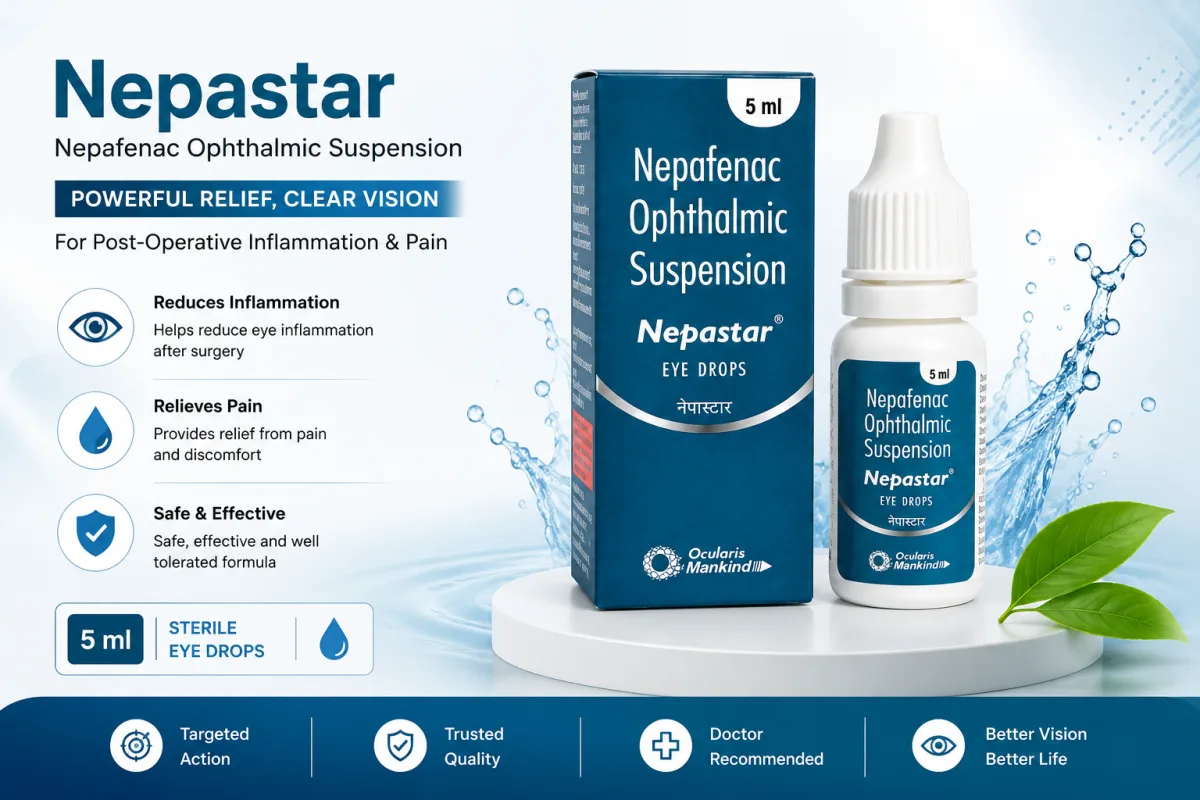
Nepastar 0.1% Eye Drop contains nepafenac 0.1% w/v and is a prescription ophthalmic medicine used under the guidance of an eye-care professional. Nepafenac belongs to a group of medicines known as non-steroidal anti-inflammatory drugs (NSAIDs). It may be prescribed to help manage pain and inflammation associated with certain eye procedures, including after cataract surgery.
Eye drops should always be used according to the instructions provided by your ophthalmologist or healthcare professional. The correct dose, duration of treatment, and frequency can vary depending on the patient's condition and the reason for treatment.
What Is Nepastar 0.1% Eye Drop?
Nepastar 0.1% Eye Drop is an ophthalmic preparation containing Nepafenac 0.1% w/v. It is designed for use in the eyes and should not be taken orally or applied to other parts of the body. Nepafenac works as an anti-inflammatory medicine and may help reduce substances involved in pain and inflammation.
If you want to learn more about the product, you can visit our Nepastar 0.1% Eye Drop 5ML product page for additional product information.
What Is Nepastar 0.1% Eye Drop Used For?
Nepastar may be prescribed by an ophthalmologist for managing eye pain and inflammation associated with certain surgical procedures. It is particularly associated with care following cataract surgery, where controlling inflammation and discomfort can be an important part of post-operative eye care.
The medicine should only be used for the condition for which it has been prescribed. Do not start using Nepastar on your own simply because you have eye redness, irritation, pain, or blurred vision. These symptoms can have different causes and may require different treatments.
How Does Nepafenac Eye Drop Work?
Nepafenac is a non-steroidal anti-inflammatory drug (NSAID). After application to the eye, it is converted into an active form that helps reduce the production of certain substances involved in inflammation and pain.
By reducing inflammatory activity, nepafenac may help manage discomfort and inflammation after an eye procedure when prescribed by an eye specialist.
How to Use Nepastar 0.1% Eye Drop
Use Nepastar exactly as directed by your ophthalmologist. Do not change the number of drops or the treatment duration unless your healthcare professional tells you to do so.
General Instructions for Applying Eye Drops
- Wash and dry your hands before using the eye drops.
- Check the bottle and make sure it is intended for ophthalmic use.
- Do not allow the dropper tip to touch your eye, eyelashes, fingers, or any other surface.
- Gently pull down the lower eyelid and place the prescribed number of drops into the affected eye.
- Close your eye gently after applying the drop.
- If advised by your healthcare professional, keep the eye closed briefly after application.
- Replace the cap securely after use.
- Wash your hands again if necessary.
If you use more than one type of eye drop, ask your doctor or pharmacist how much time should be left between different eye medicines.
Nepastar 0.1% Eye Drop Dosage
The dosage and duration of Nepastar treatment should be determined by your ophthalmologist. The appropriate schedule may depend on the type of eye procedure, the patient's condition, and other medicines being used.
Do not increase the dose or use the medicine for longer than recommended. Using an eye medicine more frequently than prescribed does not necessarily improve the condition and may increase the risk of unwanted effects.
Possible Side Effects of Nepastar
Like other medicines, Nepastar may cause unwanted effects in some people. Some eye-related effects can include temporary irritation, burning or stinging, redness, itching, or discomfort after application.
Not everyone experiences side effects, and the severity can vary. If symptoms are persistent, severe, or become worse, contact your ophthalmologist for medical advice.
When Should You Seek Medical Attention?
Contact a healthcare professional promptly if you experience severe eye pain, significant changes in vision, marked swelling, unusual discharge, or symptoms that are getting worse rather than improving.
Any serious or unexpected reaction should be discussed with a qualified healthcare professional rather than treated by increasing or stopping the medicine without advice.
Important Precautions Before Using Nepastar
Tell your doctor about your complete medical history before starting treatment. Your healthcare professional should know about any previous reactions to nepafenac, aspirin, or other NSAIDs, as well as any other eye conditions or medicines you are currently using.
- Use Nepastar only when prescribed or recommended by an appropriate eye-care professional.
- Do not share your eye drops with another person.
- Keep the dropper tip clean and avoid touching it.
- Tell your doctor about other prescription or non-prescription eye medicines you use.
- Follow all post-operative instructions provided by your ophthalmologist.
- Do not use an eye drop if the packaging or bottle appears damaged.
Using Nepastar With Other Eye Drops
If you have been prescribed multiple eye medicines, your doctor or pharmacist can explain the correct order and timing of application. Applying several products too close together can cause one drop to wash out another.
Always tell your healthcare provider about all medicines you are taking or using, including other ophthalmic preparations.
Storage and Handling
Store Nepastar according to the instructions on the product packaging and follow the manufacturer's recommended storage conditions. Keep the bottle closed when not in use and keep it away from children.
Do not use the product after its expiry date. If you notice a change in the appearance of the solution or believe that the bottle has become contaminated, consult a pharmacist or healthcare professional before using it.
Why Professional Eye-Care Guidance Matters
Eye pain, redness, watering, blurred vision, and inflammation can occur for many different reasons. An eye drop that is suitable for one condition may not be appropriate for another. This is why prescription ophthalmic medicines such as Nepastar should be used according to the advice of an ophthalmologist.
For additional information about medicines and safe medication use, you can also refer to reliable medical resources such as FDA Drug Information and MedlinePlus Drug Information.
Frequently Asked Questions About Nepastar 0.1% Eye Drop
What is Nepastar 0.1% Eye Drop?
Nepastar 0.1% Eye Drop is an ophthalmic medicine containing nepafenac 0.1% w/v. It is prescribed by eye-care professionals for managing pain and inflammation associated with certain eye procedures.
What is the active ingredient in Nepastar?
The active ingredient is Nepafenac 0.1% w/v, a non-steroidal anti-inflammatory medicine used in ophthalmic treatment.
Can I use Nepastar without a doctor's advice?
No. Nepastar should be used according to the instructions of an ophthalmologist or other qualified healthcare professional. Eye symptoms can have many causes, so self-treatment may not be appropriate.
Can Nepastar be used for any type of eye redness?
No. Nepastar should not be used simply because the eye is red or irritated. The underlying cause should be assessed by an eye-care professional before using a prescription eye medicine.
What should I do if I miss a dose?
If you forget to use a dose, follow your healthcare professional's instructions. Do not automatically use extra drops to compensate for a missed dose unless your doctor specifically advises you to do so.
Can I use other eye drops with Nepastar?
Other eye drops may sometimes be used alongside Nepastar, but the correct combination and timing should be determined by your doctor or pharmacist. Inform your healthcare provider about all eye medicines you are using.
Explore More Eye-Care Information
If you are interested in learning about other products and educational resources related to ophthalmic care, visit our Eye Care category. Always review the product information and follow professional medical advice before using prescription medicines.
Disclaimer
This article is provided for general educational and informational purposes only. It is not intended to replace professional medical advice, diagnosis, or treatment. Nepastar 0.1% Eye Drop is a prescription medicine and should be used only according to the instructions of a qualified healthcare professional. Always consult your ophthalmologist or pharmacist regarding the appropriate use, dosage, duration, precautions, possible interactions, and side effects of this medicine.