
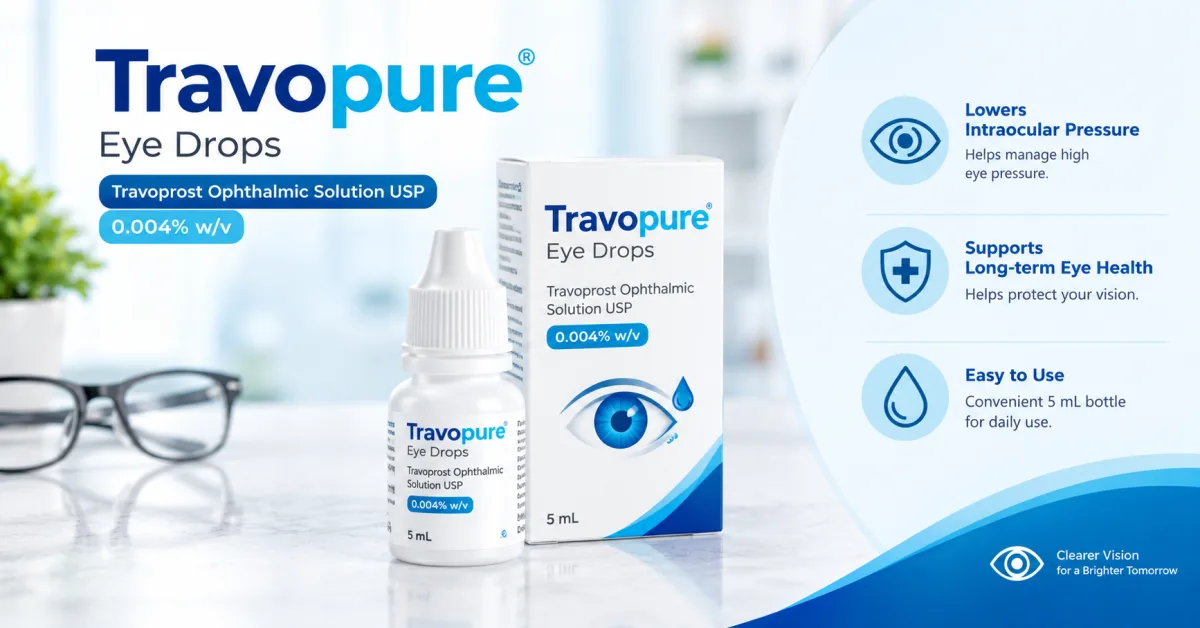
Travopure Eye Drop 3ML is an ophthalmic medicine used under medical supervision for managing increased pressure inside the eye. Eye pressure can become elevated in conditions such as glaucoma and ocular hypertension, and prolonged uncontrolled pressure may damage the optic nerve and affect vision. Medicines prescribed for reducing intraocular pressure are an important part of glaucoma management.
Travopure Eye Drop is generally associated with travoprost, a prostaglandin analogue that helps lower pressure inside the eye by improving the drainage of aqueous humour. Because glaucoma can progress without obvious symptoms in its early stages, regular eye examinations and consistent use of prescribed treatment are important.
What Is Travopure Eye Drop 3ML?
Travopure Eye Drop is an ophthalmic preparation supplied in a 3ML bottle. It is used as prescribed by an eye specialist for conditions associated with increased intraocular pressure.
The active medicine in travoprost ophthalmic preparations belongs to a group called prostaglandin analogues. It works locally in the eye to improve the outflow of fluid and thereby reduce intraocular pressure.
Uses of Travopure Eye Drop
Travopure Eye Drop may be prescribed for lowering elevated intraocular pressure in conditions such as:
- Open-angle glaucoma
- Ocular hypertension
- Other conditions where lowering intraocular pressure is medically required
Glaucoma treatment is individualised according to the type and severity of the condition, eye pressure measurements, optic nerve findings and the patient's overall eye health.
Patients looking for other medicines related to eye health can also explore the BuyCenforce Eye Care Category.
How Does Travopure Eye Drop Work?
Travoprost is a prostaglandin analogue. After being administered into the eye, it helps increase the outflow of aqueous humour through pathways that drain fluid from the eye.
As more fluid drains from the eye, intraocular pressure can decrease. Maintaining appropriate eye pressure is important because consistently elevated pressure can contribute to damage of the optic nerve in susceptible patients.
Benefits of Travopure Eye Drop
The main therapeutic purpose of Travopure is to help lower elevated pressure inside the eye. When prescribed appropriately, controlling intraocular pressure can form an important part of long-term glaucoma management.
- Helps reduce elevated intraocular pressure
- May be prescribed for open-angle glaucoma
- May be used in ocular hypertension
- Supports long-term management of pressure-related eye conditions
- Can be used as directed by an ophthalmologist
How to Use Travopure Eye Drop
Use Travopure exactly as instructed by your ophthalmologist. Wash your hands before applying the drops. Tilt your head back, gently pull down the lower eyelid and place the prescribed number of drops into the affected eye without touching the dropper tip to the eye or surrounding skin.
After applying the drop, gently close your eyes. If advised by your healthcare professional, gently press the inner corner of the eye near the nose for a short period. This can help reduce drainage of the medicine into the nose and throat.
If you use more than one type of eye drop, maintain the interval recommended by your doctor or pharmacist between different ophthalmic medicines.
Travopure Eye Drop Dosage
The dosage and frequency of Travopure should be determined by an ophthalmologist. Do not use the drops more frequently than prescribed, as increasing the frequency does not necessarily improve treatment and may increase the risk of adverse effects.
Try to use the eye drops at approximately the same time each day if your doctor has prescribed a regular schedule. Continue treatment for as long as your ophthalmologist recommends, even if your eyes feel normal.
Possible Side Effects
Some patients may experience eye-related side effects after using travoprost ophthalmic preparations. Commonly reported effects can include eye redness, eye irritation, itching, discomfort or changes around the eyelashes.
Travoprost may also gradually cause increased pigmentation of the iris or darkening of the skin around the eye in some patients. Some changes may be permanent or may not completely reverse after treatment is stopped.
Contact your eye specialist if side effects are persistent, severe or concerning. Seek urgent medical attention if you develop significant eye pain, sudden changes in vision, severe swelling or symptoms suggesting a serious allergic reaction.
Important Safety Information
- Use Travopure only according to your ophthalmologist's instructions.
- Do not touch the dropper tip to the eye, eyelid or other surfaces.
- Remove contact lenses before using the drops if instructed by your doctor or according to the product instructions.
- Tell your ophthalmologist about all other eye medicines you use.
- Inform your doctor if you have a history of eye inflammation, eye surgery or other eye conditions.
- Do not stop glaucoma treatment without discussing it with your eye specialist.
- Keep the bottle properly closed and store it according to the manufacturer's instructions.
Travopure and Contact Lenses
Patients who wear contact lenses should follow the specific instructions supplied with their Travopure product. Some ophthalmic formulations contain preservatives that can be absorbed by soft contact lenses. Your eye specialist or pharmacist can advise you about the appropriate interval between removing contact lenses, applying the drops and putting the lenses back in.
What If You Miss a Dose?
If you forget to use Travopure at the scheduled time, follow the instructions provided by your healthcare professional. Do not use extra drops to compensate for a missed dose unless your doctor specifically tells you to do so.
Why Regular Eye Check-Ups Matter
Glaucoma can develop gradually and may not cause noticeable symptoms during its early stages. Regular eye examinations allow an ophthalmologist to monitor intraocular pressure, optic nerve health and visual fields.
Using prescribed eye drops consistently and attending scheduled appointments can help your doctor determine whether treatment is adequately controlling eye pressure.
For additional information about medicines used for different eye and health conditions, readers can also explore the BuyCenforce Pain Relief Category.
Frequently Asked Questions
What is Travopure Eye Drop used for?
Travopure Eye Drop is used under medical supervision to reduce elevated intraocular pressure, including in conditions such as open-angle glaucoma and ocular hypertension.
How does Travopure lower eye pressure?
Travoprost helps increase the drainage of aqueous humour from the eye. This reduces the amount of fluid contributing to pressure inside the eye.
Can I stop Travopure when my eyes feel better?
No. Glaucoma and ocular hypertension often require long-term monitoring and treatment. Do not stop prescribed eye drops without discussing it with your ophthalmologist.
Can Travopure cause eye redness?
Yes. Eye redness or irritation can occur with travoprost ophthalmic treatment. If redness is severe or persistent, consult your eye specialist.
Can Travopure change eye colour?
Travoprost can cause increased pigmentation of the iris in some patients. This change may be permanent, so discuss potential effects with your ophthalmologist before starting treatment.
What should I do if I use too many drops?
If you accidentally use more drops than prescribed, follow the product instructions and contact your doctor or pharmacist if you are concerned or develop unusual symptoms.
Storage of Travopure Eye Drop
Store Travopure according to the storage instructions printed on the product packaging. Keep the bottle tightly closed when not in use and avoid contaminating the dropper tip. Keep the medicine out of reach of children and do not use it after the stated expiry date.
Medical Disclaimer
This article is intended for general educational purposes only and does not replace professional medical advice, diagnosis or treatment. Travopure Eye Drop should be used only according to the instructions of a qualified eye-care professional. Always consult your ophthalmologist or pharmacist before starting, stopping or changing any eye medicine.
Trusted Medical References
- MedlinePlus – Travoprost Ophthalmic
- U.S. Food and Drug Administration – FDA
- National Eye Institute – Glaucoma